

Sell For Me (beta)
Transforming passive closet owners into active sellers by removing friction from the resale experience.
Role
Lead Designer + Design Systems
Timeline
Q2 2022 – Q1 2023 (MVP Launch)
Launched as a beta in September 2024, Poshmark’s Sell For Me (Consignment) program bridges a key marketplace gap by helping people sell items without doing the work of listing, marketing, or shipping themselves. The program matches casual and inactive users with experienced power sellers who sell on their behalf. We launched in the San Jose, CA area and have expanded to the greater San Francisco bay area and Chicago, IL.
From a design perspective, this meant building trust between strangers, simplifying complex flows, and supporting two very different user needs in one system. The result was a new supply engine that reactivated dormant users, helped top sellers scale, and introduced a more flexible, assisted selling model to Poshmark.
Impact
5x supply increase
unlocking high quality listings for buyers

+10% seller reactivation
driving cross-selling growth
Improving Reliability at Scale
enabling power sellers to scale beyond their personal closets
User Research
Our initial onboarding leaned heavily on education, but funnel data showed steep drop-off before sellers ever shipped their first bag. We iterated toward a higher friction but higher committment, faster flow to improve conversion and get inventory into the hands of power sellers sooner.

Slack Channel

Moderated Interviews

Usability Testing

User Surveys

Focus Groups
Casual Seller Onboarding
Our initial onboarding leaned heavily on education, but funnel data showed steep drop-off before sellers ever shipped their first bag. We iterated toward a higher friction but higher committment, faster flow to improve conversion and get inventory into the hands of power sellers sooner.
User Feedback:
- “I was just trying to see what happens when I request a bag.”
- “I assumed Poshmark would ask me to schedule pickup once I requested my bag.”
- “It’s taking too long for the bag to get to me before I can schedule my pickup time.“
- “When I got my bag, I actually wasn’t ready to send my items.”
Team Solution:
- Maintain a low-friction flow with a stronger nudge
Keep the existing experience intact but introduce a clear, contextual prompt at the end of the flow encouraging users to schedule a pickup time. This approach aimed to preserve exploration while guiding users toward action.
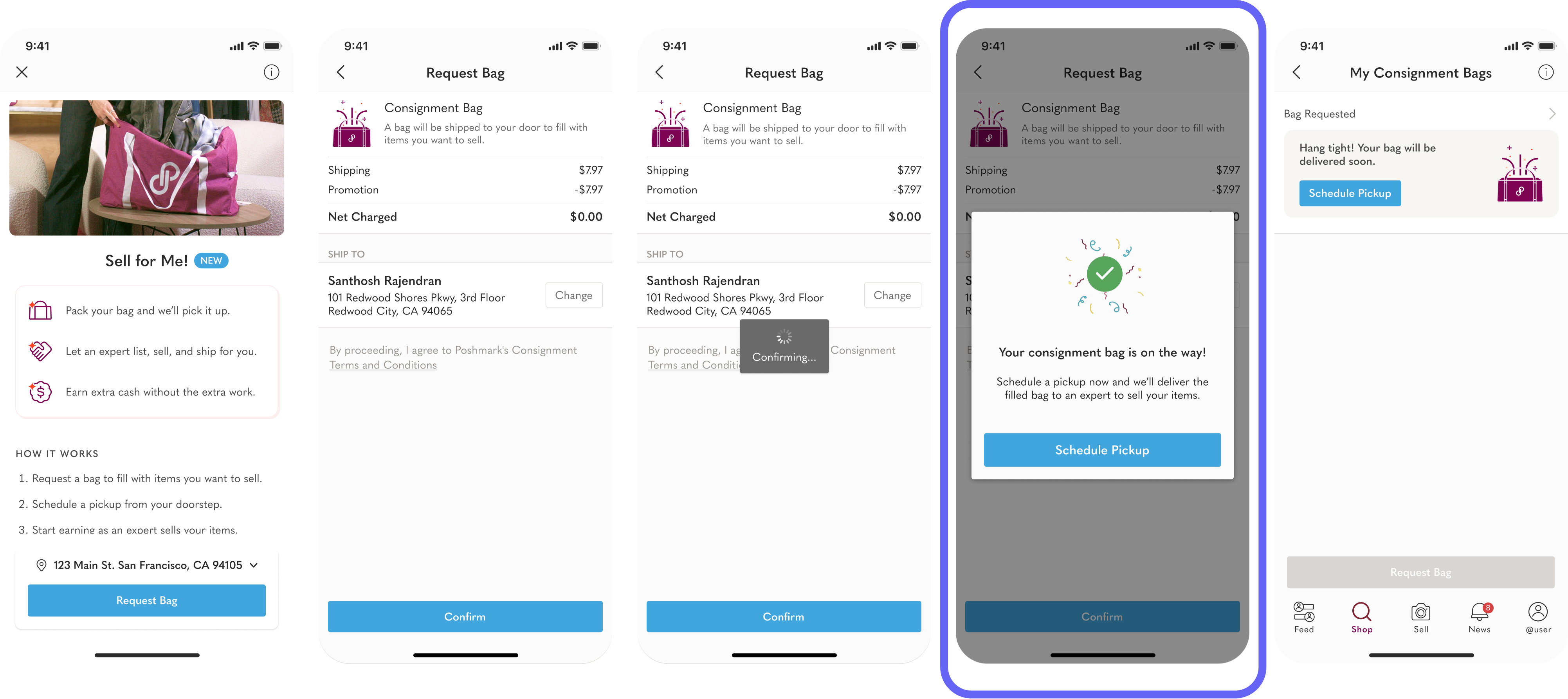
Added modal to encourage sellers to schedule a pickup. This was not aggressive enough.
- Increase comittment by requiring
Introduce intentional friction by making pickup scheduling part of the funnel before the reach the end experience. This design choice prioritized high-intent users and closed the behavioral loop, ensuring inventory would reliably move from consignors to partners. Ultimately, this decision reframed the experience from passive exploration to active commitment. Rather than optimizing only for clicks, we optimized for completed supply flow and long-term program reliability.
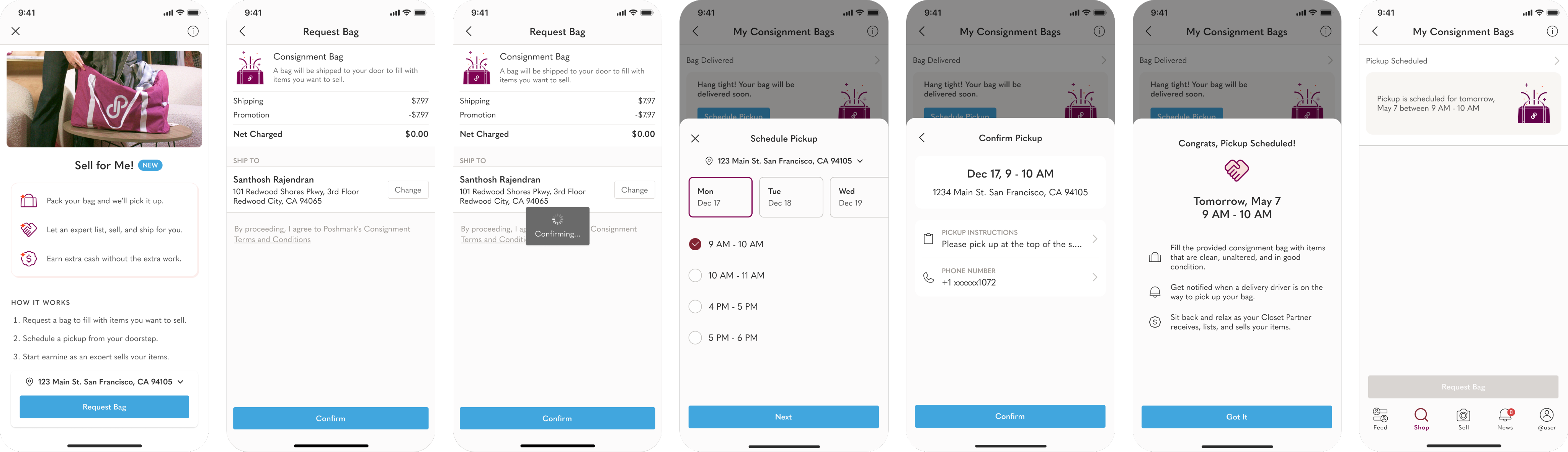

We intentionally shifted to a longer, higher-friction flow that prioritized commitment over curiosity. Instead of letting users request a bag and “figure it out later,” we introduced lightweight schedule-pickup modals that made scheduling feel like the natural next step and the only meaningful way to proceed. This closed a major loop in the experience, moving users from passive intent to active action. By requiring a pickup to be scheduled before a bag was shipped, we eliminated ambiguity, reduced drop-off, and ensured inventory moved reliably from consignors to power sellers.
Consignor Capacity Settings
User Feedback:
- “I have too much inventory and not enough room for everything.”
- “I assumed Poshmark would ask me to schedule pickup once I requested my bag.”
- “It’s taking too long for the bag to get to me before I can schedule my pickup time.“
- “When I got my bag, I actually wasn’t ready to send my items.”
Team Solution:
User feedback revealed that the issue was not just timing, but control. Power sellers were struggling with fluctuating inventory volume, limited storage space, and uncertainty around when new bags would arrive. Without visibility or flexibility, the experience felt unpredictable and overwhelming.
To address this, we designed a capacity management system that gave partners clear control over their workload. Sellers could set how many bags they were willing to receive within a given timeframe and adjust that number as their availability changed. We also introduced a calendar view that provided visibility into upcoming bag deliveries and current inventory commitments.
This shifted the experience from reactive to proactive. Instead of absorbing unpredictable supply, partners could plan ahead, manage space intentionally, and scale at a pace that felt sustainable. By designing for autonomy and transparency, we strengthened trust in the program and improved long-term partner retention.
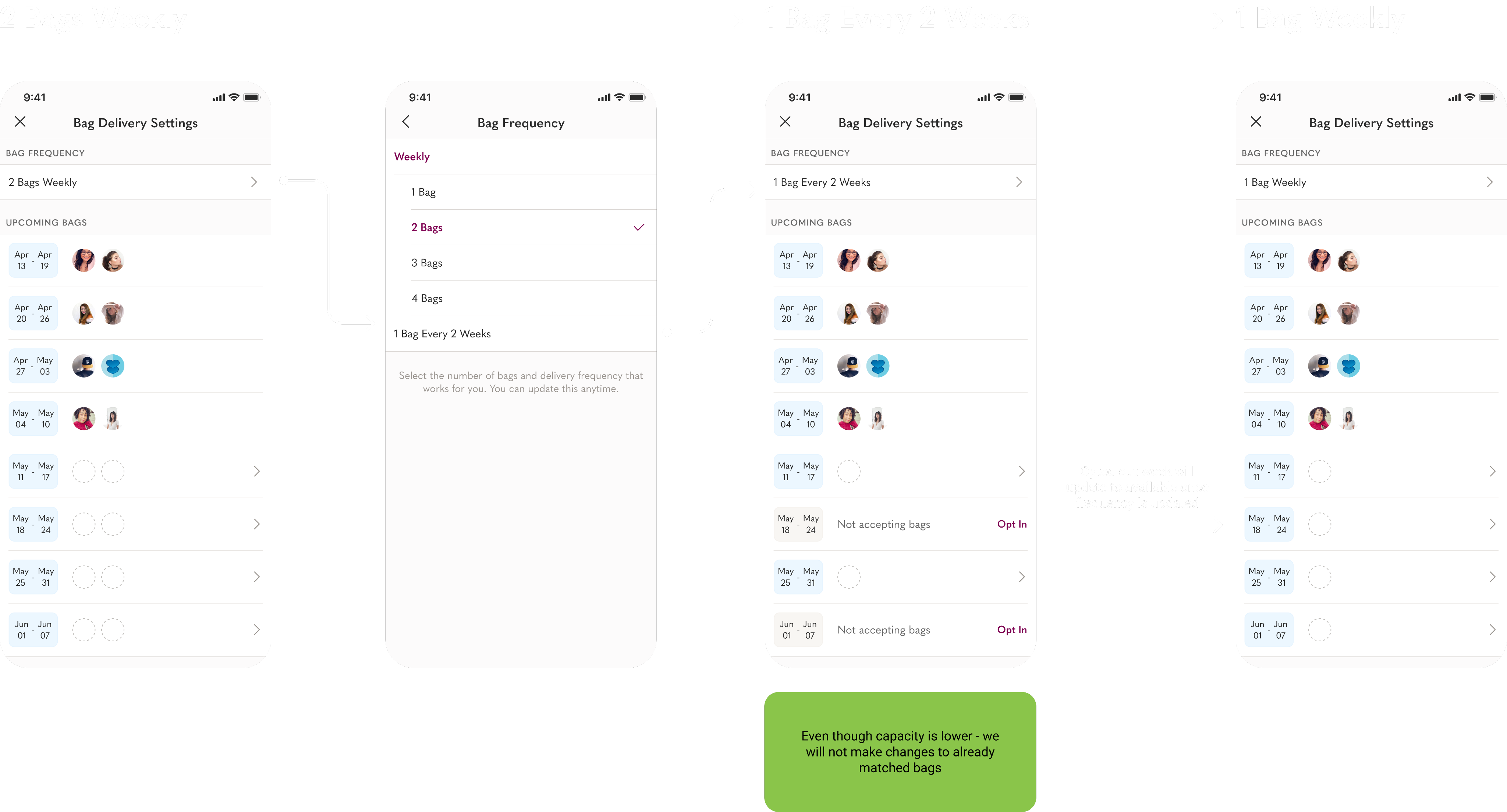
Note:
Because demand for partners to process bags was high, we made a deliberate decision to design asymmetric friction into the experience. Opting out required a two-step confirmation hidden on a separate page, while opting back in was streamlined to a single, lightweight action on the landing page.
This was intentional. We wanted partners to pause thoughtfully rather than reactively, while making it easy for them to re-engage when capacity allowed. By designing the friction strategically, we balanced seller autonomy with marketplace stability and ensured a more reliable flow of inventory through the system.
Key Learnings
Engagement, not discounts, drives loyalty
The emotional experience of participating mattered more than the reward itself. 60%+ of viewers who entered a giveaway, were more likely to engage in another Posh Show.

Simple mechanics can unlock big behavior shifts
A lightweight feature, one tap to enter, delivered outsized returns in retention, engagement and retention. Viewers came back because they felt involved, not because they expected to win. Data consistently showed that giveaways outperformed almost every other feature in terms of long-term viewer behavior. They established a model for designing micro-interactions that fuel community energy.
Engagement features must evolve distribution
Most giveaway participants were existing engaged users. To maximize effects, future iterations should broaden visibility and make entering giveaways more accessible to new viewers.

Sell For Me (beta)
Transforming passive closet owners into active sellers by removing friction from the resale experience.
Role
Lead Designer + Design Systems
Timeline
Q2 2022 – Q1 2023 (MVP Launch)
Launched as a beta in September 2024, Poshmark’s Sell For Me (Consignment) program bridges a key marketplace gap by helping people sell items without doing the work of listing, marketing, or shipping themselves. The program matches casual and inactive users with experienced power sellers who sell on their behalf. We launched in the San Jose, CA area and have expanded to the greater San Francisco bay area and Chicago, IL.
From a design perspective, this meant building trust between strangers, simplifying complex flows, and supporting two very different user needs in one system. The result was a new supply engine that reactivated dormant users, helped top sellers scale, and introduced a more flexible, assisted selling model to Poshmark.
Impact
5x supply increase
unlocking high quality listings for buyers

+10% seller reactivation
driving cross-selling growth
Improving Reliability at Scale
enabling power sellers to scale beyond their personal closets
User Research
Our initial onboarding leaned heavily on education, but funnel data showed steep drop-off before sellers ever shipped their first bag. We iterated toward a higher friction but higher committment, faster flow to improve conversion and get inventory into the hands of power sellers sooner.

Slack Channel

ModeratedInterviews

Usability Testing

User Surveys

Focus Groups
Casual Seller Onboarding
Our initial onboarding leaned heavily on education, but funnel data showed steep drop-off before sellers ever shipped their first bag. We iterated toward a higher friction but higher committment, faster flow to improve conversion and get inventory into the hands of power sellers sooner.
User Feedback:
- “I was just trying to see what happens when I request a bag.”
- “I assumed Poshmark would ask me to schedule pickup once I requested my bag.”
- “It’s taking too long for the bag to get to me before I can schedule my pickup time.“
- “When I got my bag, I actually wasn’t ready to send my items.”
Team Solution:
- Maintain a low-friction flow with a stronger nudge
Keep the existing experience intact but introduce a clear, contextual prompt at the end of the flow encouraging users to schedule a pickup time. This approach aimed to preserve exploration while guiding users toward action.
Added modal to encourage sellers to schedule a pickup. This was not aggressive enough.
- Increase comittment by requiring
Introduce intentional friction by making pickup scheduling part of the funnel before the reach the end experience. This design choice prioritized high-intent users and closed the behavioral loop, ensuring inventory would reliably move from consignors to partners. Ultimately, this decision reframed the experience from passive exploration to active commitment. Rather than optimizing only for clicks, we optimized for completed supply flow and long-term program reliability.

We intentionally shifted to a longer, higher-friction flow that prioritized commitment over curiosity. Instead of letting users request a bag and “figure it out later,” we introduced lightweight schedule-pickup modals that made scheduling feel like the natural next step and the only meaningful way to proceed. This closed a major loop in the experience, moving users from passive intent to active action. By requiring a pickup to be scheduled before a bag was shipped, we eliminated ambiguity, reduced drop-off, and ensured inventory moved reliably from consignors to power sellers.
Consignor Capacity Settings
User Feedback:
- “I have too much inventory and not enough room for everything.”
- “I assumed Poshmark would ask me to schedule pickup once I requested my bag.”
- “It’s taking too long for the bag to get to me before I can schedule my pickup time.“
- “When I got my bag, I actually wasn’t ready to send my items.”
Team Solution:
User feedback revealed that the issue was not just timing, but control. Power sellers were struggling with fluctuating inventory volume, limited storage space, and uncertainty around when new bags would arrive. Without visibility or flexibility, the experience felt unpredictable and overwhelming.
To address this, we designed a capacity management system that gave partners clear control over their workload. Sellers could set how many bags they were willing to receive within a given timeframe and adjust that number as their availability changed. We also introduced a calendar view that provided visibility into upcoming bag deliveries and current inventory commitments.
This shifted the experience from reactive to proactive. Instead of absorbing unpredictable supply, partners could plan ahead, manage space intentionally, and scale at a pace that felt sustainable. By designing for autonomy and transparency, we strengthened trust in the program and improved long-term partner retention.
Note:
Because demand for partners to process bags was high, we made a deliberate decision to design asymmetric friction into the experience. Opting out required a two-step confirmation hidden on a separate page, while opting back in was streamlined to a single, lightweight action on the landing page.
This was intentional. We wanted partners to pause thoughtfully rather than reactively, while making it easy for them to re-engage when capacity allowed. By designing the friction strategically, we balanced seller autonomy with marketplace stability and ensured a more reliable flow of inventory through the system.
Key Learnings
Engagement, not discounts, drives loyalty
The emotional experience of participating mattered more than the reward itself. 60%+ of viewers who entered a giveaway, were more likely to engage in another Posh Show.

Simple mechanics can unlock big behavior shifts
A lightweight feature, one tap to enter, delivered outsized returns in retention, engagement and retention. Viewers came back because they felt involved, not because they expected to win. Data consistently showed that giveaways outperformed almost every other feature in terms of long-term viewer behavior. They established a model for designing micro-interactions that fuel community energy.
Engagement features must evolve distribution
Most giveaway participants were existing engaged users. To maximize effects, future iterations should broaden visibility and make entering giveaways more accessible to new viewers.
Sell For Me (beta)
Transforming passive closet owners into active sellers by removing friction from the resale experience.
Launched as a beta in September 2024, Poshmark’s Sell For Me (Consignment) program bridges a key marketplace gap by helping people sell items without doing the work of listing, marketing, or shipping themselves. The program matches casual and inactive users with experienced power sellers who sell on their behalf. We launched in the San Jose, CA area and have expanded to the greater San Francisco bay area and Chicago, IL.
From a design perspective, this meant building trust between strangers, simplifying complex flows, and supporting two very different user needs in one system. The result was a new supply engine that reactivated dormant users, helped top sellers scale, and introduced a more flexible, assisted selling model to Poshmark.
Role
Took over as lead designer midstream and guided the product from early beta into expansion and scale.
Timeline
Q1 2025 – Q2 2025
Impact
5x supply increase
unlocking high quality listings for buyers

+10% seller reactivation
driving cross-selling growth
Improving Reliability at Scale
enabling power sellers to scale beyond their personal closets
User Research
From the start, we treated Sell For Me as a learning-driven beta. Our team deeply championed user research as a core part of the product process, not a checkbox. We created a dedicated Slack channel with a hand-selected group of power sellers who were available for real-time feedback, questions, and validation. This gave us a constant pulse on what was working and what wasn’t.
We supplemented this with structured research: user surveys, one-on-one moderated interviews, and usability testing to understand both behavior and motivation. We also ran weekly focus groups and shared synthesized reports across Product, Design, and Ops. This tight feedback loop allowed us to iterate quickly and meaningfully, grounding every design decision in real user insight and helping the beta evolve into a scalable, trusted program.

Slack Channel

Moderated Interviews
Usability Testing

User Surveys

Focus Groups
Casual Seller Onboarding
Our initial onboarding leaned heavily on education, but funnel data showed steep drop-off before sellers ever shipped their first bag. We iterated toward a higher friction but higher commitment, to improve conversion and get inventory into the hands of power sellers.
User Feedback:
- “I was just trying to see what happens when I request a bag.”
- “I assumed Poshmark would ask me to schedule pickup once I requested my bag.”
- “It’s taking too long for the bag to get to me before I can schedule my pickup time.“
- “When I got my bag, I actually wasn’t ready to send my items.”
Team Solution:
- Maintain a low-friction flow with a stronger nudge
Keep the existing experience intact but introduce a clear, contextual prompt at the end of the flow encouraging users to schedule a pickup time. This approach aimed to preserve exploration while guiding users toward action.
Added modal to encourage sellers to schedule a pickup. This was not aggressive enough.
- Increase commitment by requiring scheduling upfront
Introduce intentional friction by making pickup scheduling part of the funnel before the reach the end experience. This design choice prioritized high-intent users and closed the behavioral loop, ensuring inventory would reliably move from consignors to partners. Ultimately, this decision reframed the experience from passive exploration to active commitment. Rather than optimizing only for clicks, we optimized for completed supply flow and long-term program reliability.
We intentionally shifted to a longer, higher-friction flow that prioritized commitment over curiosity. Instead of letting users request a bag and “figure it out later,” we introduced lightweight schedule-pickup modals that made scheduling feel like the natural next step and the only meaningful way to proceed. This closed a major loop in the experience, moving users from passive intent to active action. By requiring a pickup to be scheduled before a bag was shipped, we eliminated ambiguity, reduced drop-off, and ensured inventory moved reliably from consignors to power sellers.
Consignor Capacity Settings
Our initial onboarding leaned heavily on education, but funnel data showed steep drop-off before sellers ever shipped their first bag. We iterated toward a higher friction but higher commitment, to improve conversion and get inventory into the hands of power sellers.
User Feedback:
- “I have too much inventory and not enough room for everything.”
- “I assumed Poshmark would ask me to schedule pickup once I requested my bag.”
- “It’s taking too long for the bag to get to me before I can schedule my pickup time.“
- “When I got my bag, I actually wasn’t ready to send my items.”
Team Solution:
User feedback revealed that the issue was not just timing, but control. Power sellers were struggling with fluctuating inventory volume, limited storage space, and uncertainty around when new bags would arrive. Without visibility or flexibility, the experience felt unpredictable and overwhelming.
To address this, we designed a capacity management system that gave partners clear control over their workload. Sellers could set how many bags they were willing to receive within a given timeframe and adjust that number as their availability changed. We also introduced a calendar view that provided visibility into upcoming bag deliveries and current inventory commitments.
This shifted the experience from reactive to proactive. Instead of absorbing unpredictable supply, partners could plan ahead, manage space intentionally, and scale at a pace that felt sustainable. By designing for autonomy and transparency, we strengthened trust in the program and improved long-term partner retention.
Note:
Because demand for partners to process bags was high, we made a deliberate decision to design asymmetric friction into the experience. Opting out required a two-step confirmation hidden on a separate page, while opting back in was streamlined to a single, lightweight action on the landing page.
This was intentional. We wanted partners to pause thoughtfully rather than reactively, while making it easy for them to re-engage when capacity allowed. By designing the friction strategically, we balanced seller autonomy with marketplace stability and ensured a more reliable flow of inventory through the system.
Key Learnings
High-Quality Listings Alone Don’t Drive Sell-Through
We started with the hypothesis that improving listing quality would directly increase sell-through. While we successfully increased seller participation and overall supply, orders did not meaningfully rise. The data showed that quality alone wasn’t the primary constraint. Pricing, demand, and discovery played a much larger role. Poshmark’s marketplace was highly saturated, and buyers still struggled to find what they actually wanted to purchase.
The real bottleneck wasn’t creation, but connection. To drive sell-through, we needed stronger matching and discovery, specifically, a more intelligent ML model that could surface the right listings to the right buyers at the right time.

Evolution of “Acquire Inventory” → “Control Inventory”
Early versions focused on increasing inventory inflow: improving bag requests, auto-approvals, and geographical reach. These efforts successfully increased the volume of incoming inventory. However, as the system matured, we learned that more inventory alone wasn’t the goal, meaningful inventory was. Later versions shifted toward inventory management, not just acquisition. We built tools for power sellers to set caps and control frequency, enabling more intentional, sustainable growth.
Bridging Connection Increases Reliability & Trust